Agent Architectures

A Memory Gate for AI: Policy-Bounded Acceptance in the Executable Cognitive Kernel

A Memory Gate for AI: Policy-Bounded Acceptance in the Executable Cognitive Kernel

Summary

Dynamic AI systems face a hidden failure mode: they can learn from their own mistakes. If every output is allowed into memory, stochastic errors do not stay local they accumulate.

In earlier posts, I argued that AI systems should not be trusted to enforce their own correctness.

Modern models are stochastic. They produce correct outputs, partially correct outputs, and completely incorrect outputs, but they do not reliably distinguish between them. That means a system that stores everything it generates will eventually learn from its own mistakes.

Intelligence Through Execution: The Executable Cognitive Kernel

Intelligence Through Execution: The Executable Cognitive Kernel

đź§­ Summary

Most modern AI systems treat intelligence as something stored inside a model.

A neural network is trained on massive datasets, its weights are adjusted, and those weights become the system’s knowledge. When the model produces an output, we interpret that output as the result of the intelligence encoded inside those parameters.

But this perspective has a limitation.

Once training is complete, the model is largely static. It does not improve through its own actions, and it does not adapt based on the outcome of its behavior unless we retrain it.

Thoughts of Algorithms

Thoughts of Algorithms

How a self-evolving AI learns to reflect, score, and rewrite its own reasoning

đź§Ş Summary

What if an AI could think not just solve problems, but reevaluate its beliefs in the face of new information?

In this post, we introduce a system that does exactly that. At the core of our pipeline is a lightweight scoring model called MR.Q, responsible for evaluating ideas and choosing the best ones. But when it encounters a new domain, a new goal, or a shift in task format, it doesn’t freeze it adapts.

Document Intelligence: Turning Documents into Structured Knowledge

Document Intelligence: Turning Documents into Structured Knowledge

đź“– Summary

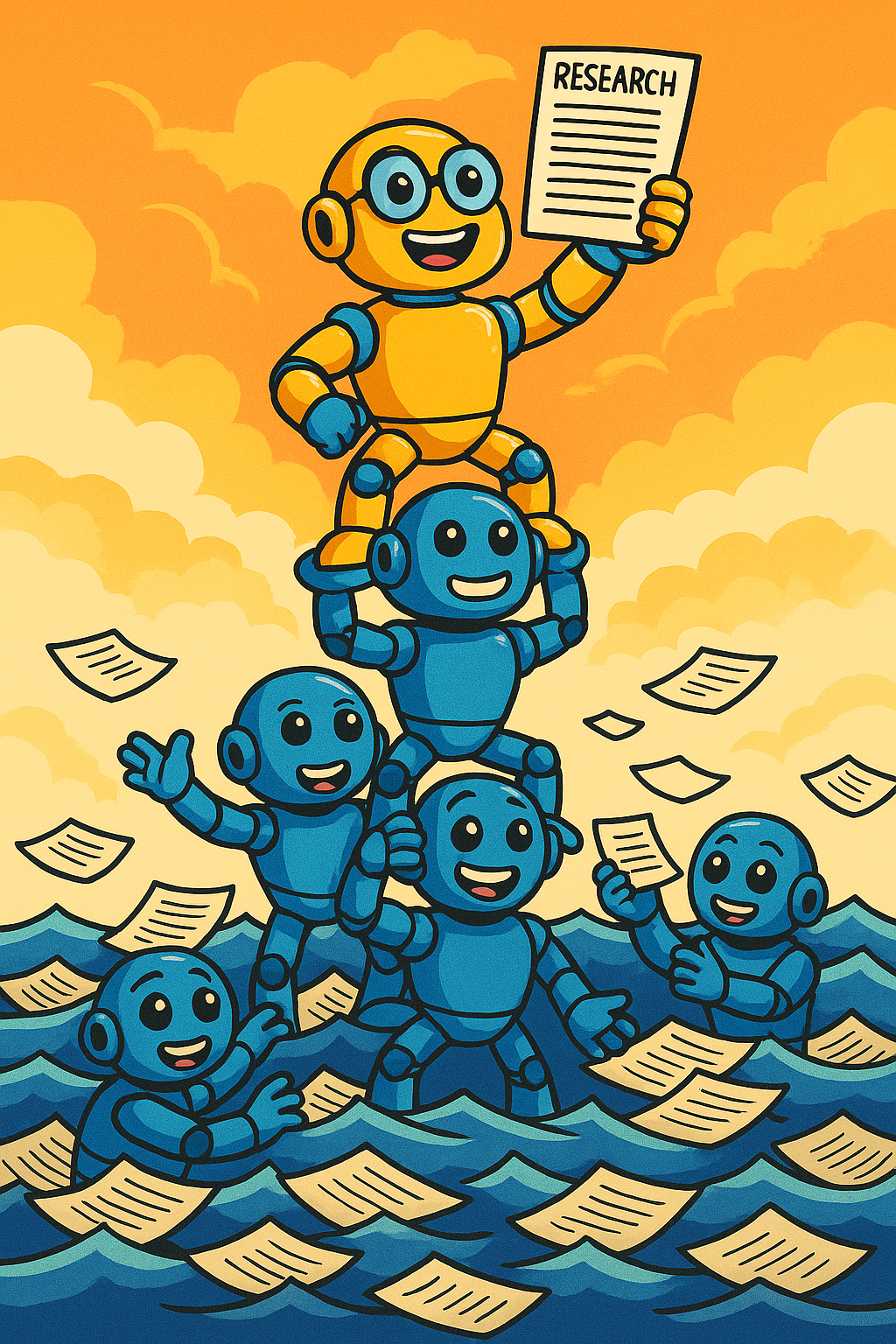
Imagine drowning in a sea of research papers, each holding a fragment of the knowledge you need for your next breakthrough. How does an AI system, striving for self-improvement, navigate this information overload to find precisely what it needs? This is the core challenge our Document Intelligence pipeline addresses, transforming chaotic documents into organized, searchable knowledge.

In this post we combine insights from Paper2Poster: Towards Multimodal Poster Automation from Scientific Papers and Domain2Vec: Vectorizing Datasets to Find the Optimal Data Mixture without Training to build an AI document profiler that transforms unstructured papers into structured, searchable knowledge graphs.

Adaptive Reasoning with ARM: Teaching AI the Right Way to Think

Adaptive Reasoning with ARM: Teaching AI the Right Way to Think

Summary

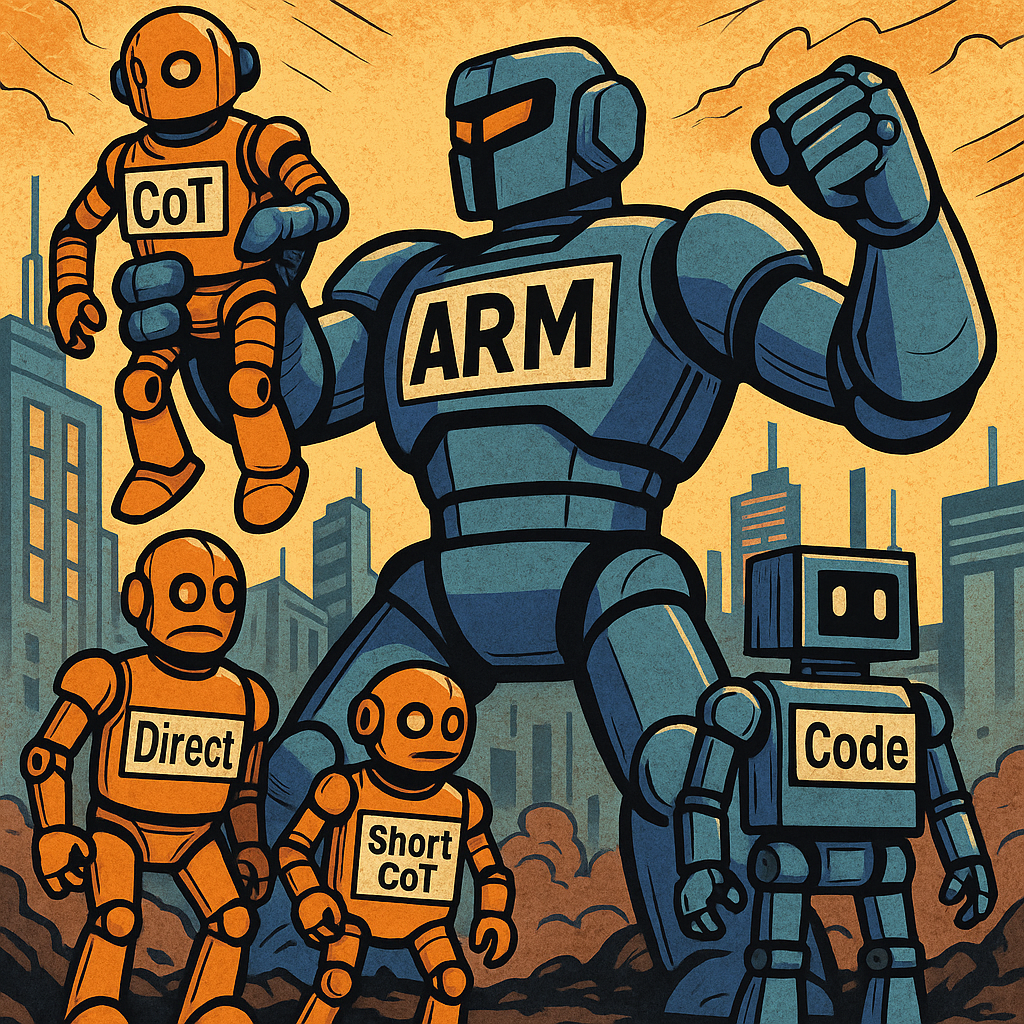
Chain-of-thought is powerful, but which chain? Short explanations work for easy tasks, long reflections help on hard ones, and code sometimes beats them both. What if your model could adaptively pick the best strategy, per task, and improve as it learns?

The Adaptive Reasoning Model (ARM) is a framework for teaching language models how to choose the right reasoning format direct answers, chain-of-thoughts, or code depending on the task. It works by evaluating responses, scoring them based on rarity, conciseness, and difficulty alignment, and then updating model behavior over time.