About Programmer.ie

Understand it.
Build it. Use it.

Programmer.ie is where I work through AI and software systems from first principles, then turn the useful results into books, experiments, diagnostics and working tools.

Working systems

The work should lead somewhere concrete

Programmer.ie is not only a publishing project. The same research and experiments should eventually become tools, systems or solution paths that can be used outside the page.

Books

A book gives a difficult subject enough room to be understood properly. The next step is to turn that understanding into a capstone, diagnostic, experiment or working system rather than stopping at explanation.

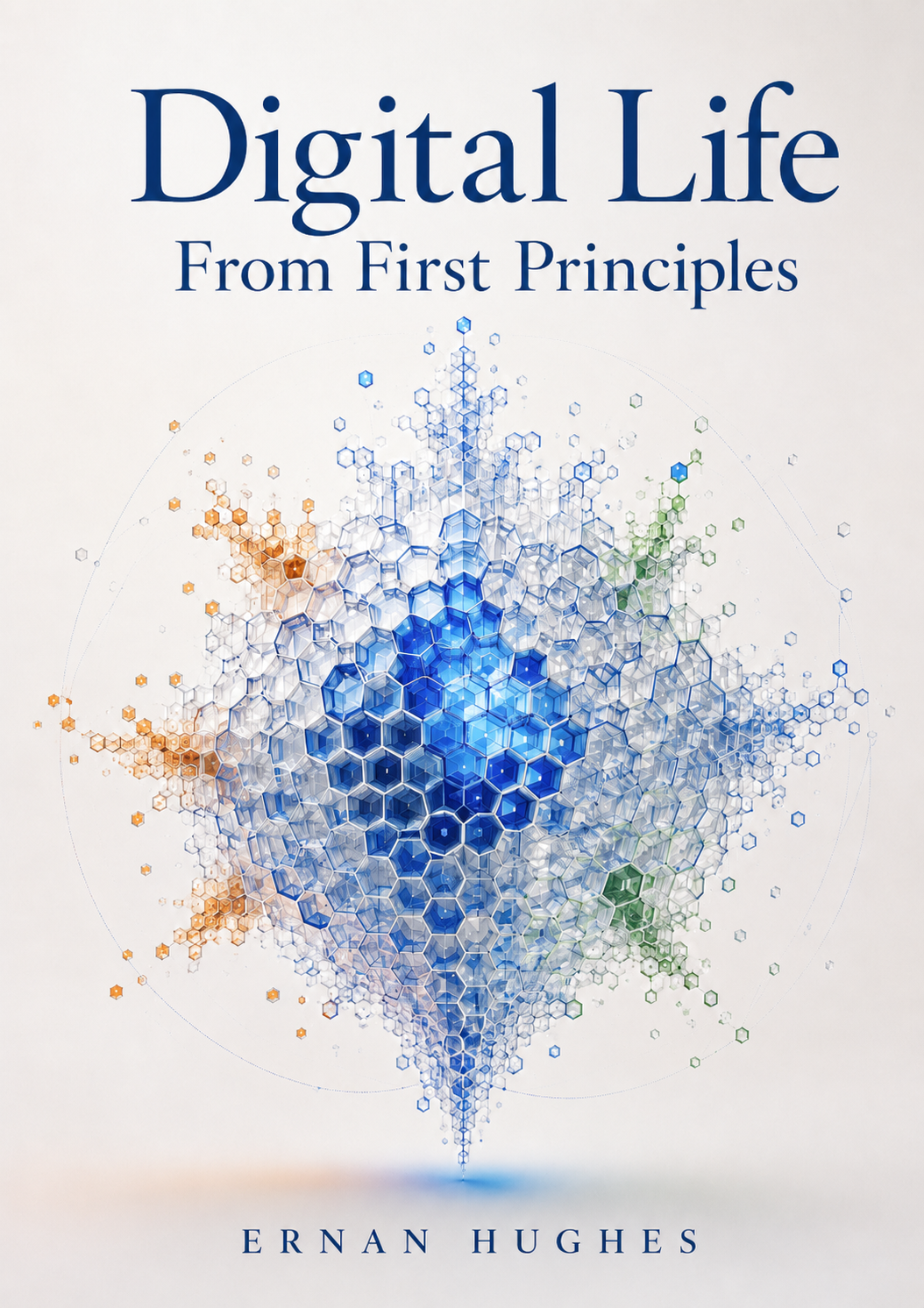
Digital Life: From First Principles cover
Featured book

Digital Life: From First Principles

An Experimental Search for Life-Like Organization in Computation

What would it take for a computational system to earn the language of life?

An experimental search for life-like organization in computational systems — through emergence, causality, persistence, material turnover, hidden state and finite computation.

19 chapters Read free online
Read the book →
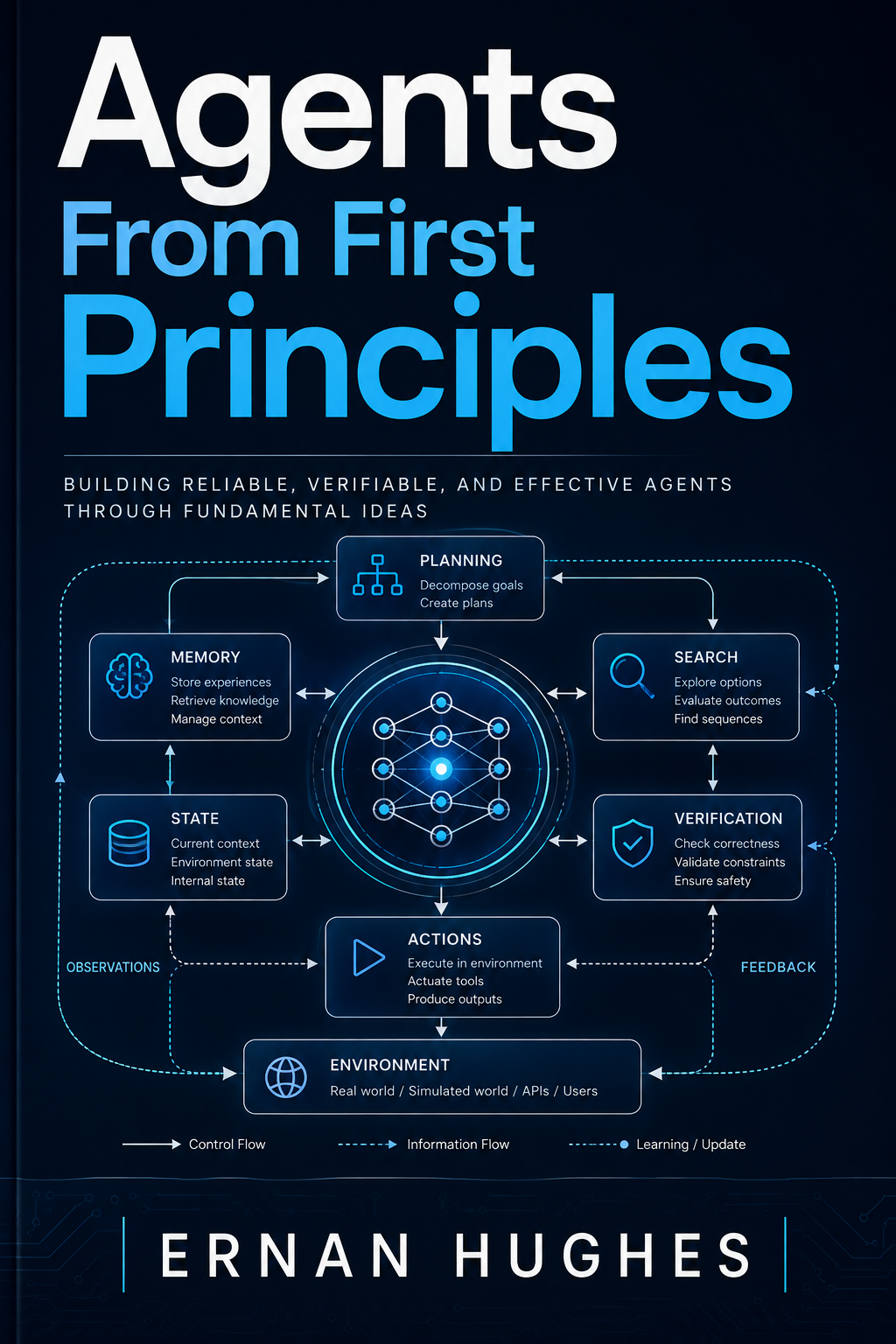
Agents From First Principles cover
Featured book

Agents From First Principles

What actually makes an AI system an agent, and what makes that agent reliable?

Build reliable AI agents by understanding the mechanisms underneath them: control loops, actions, validation, planning, state, tools, memory, search, and external verification.

11 chapters Read free online
Read the book →
What we are building

One loop from problem to solution

The intended shape of the site is simple: start with a problem or question, understand the mechanism, test it, and turn the result into something usable. Books, articles, experiments and solutions are different stages of that loop rather than separate publishing channels.

Over time, each major book should have a practical destination: a capstone, diagnostic, tool, demo or product that makes the ideas concrete.

01

Understand

Work from first principles until the mechanism, trade-offs and evidence are clear.

02

Test

Use code, experiments and reproducible evidence to find what actually survives contact with reality.

03

Build

Turn the useful result into a capstone, diagnostic, tool, demo or working system.

04

Use

Make the result accessible from the problem people are trying to solve, not only from the publication that produced it.

The thesis

AI is becoming the interface to information and technology.

If that is true, AI is not simply another technology category. It changes programming, research, finance, software, knowledge work and increasingly the way people interact with computers at all.

Programmer.ie follows that transition by trying to understand the machinery beneath the claims: what actually works, why it works, what the evidence supports, and how the idea can be used in practice.

How we work

From question to working result

The format can change. The method should not.

01

Start from first principles

Separate names from mechanisms. Identify the distinctions that have to be understood before the subject becomes clear.

02

Build and test

Use code, notebooks, experiments and working systems where possible instead of relying on description alone.

03

Separate evidence from claims

Ask what a result actually establishes, what it does not establish, and what competing explanation remains.

04

Turn it into a solution

Make the durable result usable as a diagnostic, tool, demo, system or book-backed application path.

The site

Different entry points into the same work

Start from the depth you need, then move between explanation and application.

Ernan Hughes
About the author

Ernan Hughes

I am a programmer and independent author exploring how AI changes software, knowledge work and the systems we build. Programmer.ie is where I turn that work into public experiments, learning material, practical tools and books.

“I believe AI will become the primary way we interact with information and technology.”
Start here

Start with the problem you want to understand or solve.

Go to the solution library if you have a concrete problem, or open a book when you want the full mechanism behind it.