Living Against Parkinson’s: A Practical Guide to Fighting Back
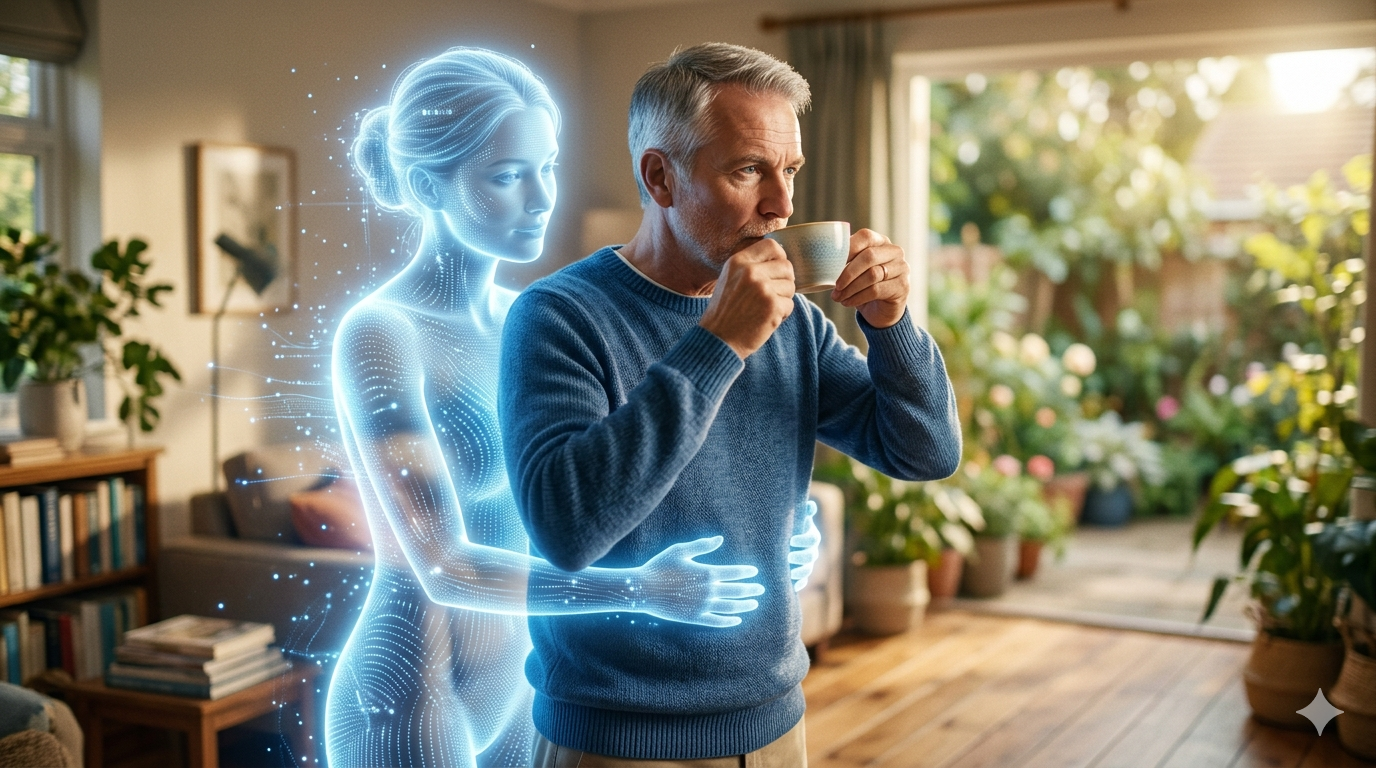
🧩 SECTION 1: Introduction
How would you actually live if you were trying to fight this properly?
Not cure it. Not pretend it’s easy. But fight it intelligently, consistently, and over time.
That’s what this is.
Parkinson’s isn’t the largest disease in the world but it is one of the most demanding long-term neurological conditions a person can face. It reshapes movement, energy, thinking, and daily life and it does so unevenly, changing from day to day.
And there’s a distinction that must be held clearly:
You are not the disease. The disease affects you. It does not get to decide who you are.
Holding that line that this is something you are dealing with, not something that defines you is not easy. It may be one of the hardest parts of the entire process. But it matters, because everything that follows depends on keeping that distinction intact.
Most approaches stop at description or treatment.
This one doesn’t.
This is about building a system around the disease.
A way to:
- understand what is happening
- respond in a structured way
- and improve how you live with it over time
Because while you can’t control everything about Parkinson’s
you can control how you observe it, how you adapt to it, and how you respond.
With consistent tracking, structured thinking, and modern AI tools, you can begin to:
- see patterns that would otherwise be invisible
- make better day-to-day decisions
- and build a feedback loop that actually learns over time
Not a cure. Not a miracle.
But a way to hold ground, reduce friction, and improve your trajectory one day at a time.
🧠 SECTION 2: What Parkinson’s Actually Is
Parkinson’s is a neurodegenerative condition.
At its core, it involves the gradual loss of dopamine-producing neurons and the buildup of misfolded proteins in the brain.
But that definition doesn’t capture the lived experience.
Because Parkinson’s isn’t just shaking.
It’s:
- slowness
- stiffness
- fatigue
- shifts in mood
- changes in thinking
- and, most importantly, fluctuation
Some days are better. Some days are worse. Over time, that unpredictability becomes one of the hardest parts.
The best way to understand it is not as a single event but as a process:
something that develops slowly, shaped by biology, environment, and time
Which means:
how you live with it matters.
Every one of these symptoms is not just something you feel. It’s also a signal:
- movement speed
- tremor patterns
- voice changes
- sleep quality
- mood variation
- response to medication
All of these change over time. All of them interact. And most of them are trackable.
That matters.
Because once something can be observed clearly it can be understood better. And once it can be understood it can be responded to more intelligently.
⚔️ SECTION 3: The Three Fronts of the Fight
If we were going to approach Parkinson’s seriously, we wouldn’t treat it as one problem.
We’d treat it as three.
Three fronts that need to be managed together:
- The mental front
- The physical front
- The environmental front
Because Parkinson’s isn’t fought in one place.
It’s fought:
- in how you think
- in how you move
- and in the world you build around yourself
But these aren’t separate problems. They interact.
A change in one front affects the others:
- A poor night’s sleep (environment) can lead to worse movement (physical) and lower mood (mental)
- Increased stress (mental) can increase stiffness or tremor (physical)
- A cluttered or unpredictable space (environment) can make movement harder and increase anxiety
Over time, these interactions compound.
You’re not dealing with three isolated challenges. You’re dealing with a connected system.
That changes how you approach it.
You’re not trying to “fix” Parkinson’s. You’re trying to stabilize the system around it.
You don’t have to do everything at once. But you do need a way to:
- stay steady as things change
- notice what is helping and what isn’t
- and adjust over time
🧠 SECTION 4: The Mental Front
The mental front is about stability.
Parkinson’s creates uncertainty. Uncertainty, over time, wears people down.
So the goal here is simple: don’t let the disease take your footing mentally
This doesn’t mean forced positivity. It means:
- having space to process difficult days
- building small routines that ground you
- and learning how to steady yourself when things feel off
A simple mental protocol
There will be moments where your mood shifts, your patience drops, or your energy collapses in a way that doesn’t feel entirely like you.
In those moments, pause if you can and ask: “Is this me or is this the disease?”
That question doesn’t fix everything. But it creates something important:
a small amount of space between the feeling and your response
Sometimes, that space is enough to:
- pause instead of react
- recognize a pattern
- step back from a mood that might otherwise take over
And even when it doesn’t change the outcome
it builds awareness
How to use AI here
AI supports your judgment. Think of it as an external memory and pattern detector:
- Voice journaling: When writing feels like too much, speak instead. Let AI transcribe and summarize patterns over time.
- Mood + context tracking: Capture short notes on mood, sleep, movement, and medication. Over time, AI can highlight correlations you wouldn’t spot manually.
- Weekly reflection summaries: Instead of guessing how the week felt, review a short AI-generated summary of mood trends, symptom fluctuations, and what seemed to help.
- Simple guided resets: Use short breathing or body-scan sessions (2–5 minutes). Consistency matters more than duration.
- Mental reset list: Keep 2–3 reliable interventions: a short walk, a piece of music, one person you can call.
These practices don’t change the disease directly. But they change something just as important:
how you experience it and how you respond to it over time
💡 SECTION 5: Notes to Yourself
One of the most useful tools isn’t medical at all.
It’s keeping notes but in a very specific way.
Not just tracking symptoms.
Leaving messages to yourself across time.
There’s a simple reality with Parkinson’s: The version of you on a bad day is not the same as the version of you on a good day. Memory gets distorted. Perspective narrows. And in the moment, it can feel like: “this is how things are now.”
That’s where this system comes in.
You’re not just writing notes.
You’re building a bridge between different versions of yourself.
The three types of notes
-
Down notes: written when things are difficult “Stiff today. Hard to get moving. Passed after 40 minutes.”
-
Up notes: written when things feel better “Felt more fluid this morning. Walked without thinking about it.”
-
Guide notes: advice for your future self “When stuck, count out loud in rhythm. It helps unlock movement.”
Because the person who understands what you’re going through best…
is you
Just not always the version of you that’s having a bad day.
How AI strengthens this system
On its own, this is powerful. With AI, it becomes much more than a notebook. Think of it as turning your notes into a searchable, evolving memory system:
- Automatic tagging & grouping: Tag notes as
#down,#up,#guide→ AI can cluster similar situations and highlight patterns - Pattern extraction: Ask: “What helped me on my last 3 difficult days?” → AI surfaces common actions
- Guide synthesis: Weekly prompt: “Pull my most useful guide notes and turn them into a short checklist”
- Trigger awareness: Over time, AI can highlight links between mood, sleep, movement, and medication timing
This is no longer just journaling.
It becomes a personal playbook.
A system that learns from your past, adapts to your patterns, and helps you respond faster and more effectively.
On a difficult day, you don’t have to guess. You can look back and see:
“I’ve been here before. And this is what helped.”
(We’ll see exactly how to implement this tracking system in Section 9.)
💪 SECTION 6: The Physical Front
The physical front is where you act directly.
This is where you:
- move
- take medication
- protect your sleep
- and support your body
Of all the things here, one stands out clearly:
movement matters
Exercise is one of the few interventions consistently associated with improvements in mobility, balance, energy, and overall function. There is also growing evidence that regular, structured exercise may help delay functional decline in some people over time meaning you maintain your ability to move and balance independently for longer.
The key idea is simple: Not extreme training. Not pushing to exhaustion.
consistent, deliberate movement over time
Why this matters
Movement isn’t just physical. It affects the entire system:
- improves mood
- supports sleep
- enhances response to medication
- reduces stiffness and freezing risk
Which means:
movement is not just one part of the system it is one of the main stabilizers of it
AI as a Movement Coach
AI doesn’t replace effort. It helps you see, track, and stay consistent. Think of it as a measurement and feedback layer for your physical system:
- Wearable tracking: Sync a wearable (Apple Watch, Garmin, Oura, etc.) to track resting heart rate, sleep quality, daily movement, and variability over time → not to obsess over daily numbers, but to observe trends
- Trend comparison (not daily noise): Ask: “Am I moving more or less than last week? Is my baseline improving or slipping?” AI can smooth out noise and highlight real changes.
- Medication timing support: Parkinson’s medication is highly time-sensitive. Use AI-driven reminders to maintain consistent timing, log actual intake vs planned, and identify patterns in “on” and “off” periods.
- Movement consistency prompts: Instead of relying on motivation, use simple prompts, short daily targets, and repeatable routines → consistency beats intensity.
What this becomes over time
When tracked consistently, these are no longer isolated habits. They become signals. Signals that show:
- what improves your baseline
- what destabilizes it
- and how your body responds over time
And once those signals are visible:
you can adjust earlier, respond more precisely, and avoid unnecessary declines
This isn’t about perfection. You will miss days. You will have setbacks.
It’s about consistency over time
🌍 SECTION 7: Environmental Front
The third front is often ignored. But over time, it becomes one of the most important:
the environment around you
This includes:
- your living space
- your daily routines
- your support system
Parkinson’s reduces automatic movement. Things that once required no thought—walking through a doorway, turning in bed, starting a task—can become effortful.
That means your environment matters more than it used to. Because every unnecessary obstacle becomes friction.
The goal
Not perfection. Not turning your home into a clinical space.
The goal is simple: reduce friction wherever possible
Small changes can make a meaningful difference:
- Clearer spaces → fewer interruptions in movement
- Better lighting → improved visual perception and confidence
- Predictable routines → less cognitive load and stress
- Satin sheets or silk pillowcases → easier turning in bed, a common struggle when rigidity sets in at night. Simple, affordable, and surprisingly effective.
Over time, these changes compound. Less friction means less hesitation, less fatigue, more stability across the day.
How AI helps
AI doesn’t change the environment directly. It helps you shape and adapt it over time. Think of it as a layer that observes patterns and suggests adjustments:
- Automation of routine tasks: Use smart speakers or scheduled routines for medication reminders, hydration prompts, wind-down cues → reduces reliance on memory, creates consistency
- Friction detection: Over time, AI can highlight patterns like: “You consistently struggle with movement early in the morning. Your energy drops after this part of your routine.” → suggesting small adjustments
- Low-effort logging: Use voice assistants to capture quick updates: “stiff this morning,” “better after walk” → no need to open apps or type
The Result: An Environment That Works With You
Your environment stops being something you react to.
It becomes something that supports you.
A space and routine that reduces unnecessary effort, adapts to your patterns, and makes daily life more manageable.
This isn’t about preparing for the worst.
It’s about making life easier to live day-to-day
📊 SECTION 8: The Missing Piece: Measurement
There’s one problem with everything above.
Even if you do all of it exercise, routines, notes, adjustments
how do you know what’s actually working?
Parkinson’s fluctuates. Memory is unreliable. And over time, everything blurs together.
If you can’t measure change, you can’t:
- tell what is helping
- tell what is hurting
- or adjust with confidence
That means effort gets wasted. Good habits get dropped. Ineffective ones get repeated. And progress if it’s happening can go unnoticed.
The shift
So you need something simple:
a way to measure your days
Not to obsess over numbers. Not to turn life into a spreadsheet.
But to answer one question:
“Are my routines actually moving the needle?”
You don’t need everything. Just a few consistent signals:
- movement (speed, consistency, variability)
- sleep quality
- medication timing
- mood and energy
- key notes (what helped / what didn’t)
Individually, these don’t tell the full story. But over time, patterns emerge.
Where AI fits
This is exactly the kind of problem AI is suited for. Not because it’s intelligent in a human sense but because it is:
- consistent
- patient
- and good at finding patterns in noisy data
AI can:
- smooth out day-to-day noise
- highlight trends over time
- connect signals that are easy to miss
For example:
- movement improving when sleep improves
- symptoms worsening when medication timing drifts
- mood shifts aligning with physical fluctuations
Things that are almost impossible to see clearly in real time but become obvious when viewed across weeks.
What this unlocks
Once you can see patterns: you can respond earlier
Instead of reacting to bad days, you start adjusting based on trends.
That’s the difference between reacting and adapting.
Measurement doesn’t solve Parkinson’s. But it changes how you deal with it. It turns uncertainty into something you can work with
📱 SECTION 9: Build Your AI Co-Pilot (Not a Custom App)
You don’t need to build software.
You need a system you can actually use.
The goal isn’t complexity. It’s consistency.
Here’s a simple, low-friction setup you can run today:
1. Capture (1–2 minutes a day)
Use your phone’s voice recorder or a notes app. Log a quick check-in:
- how you felt
- how you moved
- anything that stood out
Keep it short. Consistency matters more than detail.
2. Tag (structure the signal)
Label entries by:
- Front:
mental,physical,environment - Type:
down,up,guide
This turns unstructured thoughts into something searchable and comparable.
3. Sync (add objective data)
Connect a wearable (Apple Watch, Garmin, Oura, etc.) to track:
- sleep
- movement
- resting heart rate / variability
This complements your notes with objective signals.
4. Review (once per week)
Take 5 minutes.
Paste your notes + wearable summary into an AI tool and use this prompt:
You are an objective health assistant. I am pasting my notes and data from this week and last week. Only use the data provided. Compare them. If there is a clear difference in movement, sleep, or mood, note it. Suggest one small environmental or routine change based solely on the data. If no pattern is clear, say 'Insufficient data.' Keep response under 150 words.
This step is critical. It turns raw data into insight.
5. Act (one change at a time)
Pick one adjustment. Not three. Not five. One.
Implement it for the next week. Then repeat the cycle.
What this actually is
This is not an app.
It’s a feedback loop:
capture → structure → measure → review → adjust → repeat
Over time, that loop does something powerful:
- it reduces guesswork
- it highlights what actually helps
- it lets you respond earlier instead of reacting late
The core question
All of this comes down to one thing: “Am I getting better, worse, or staying the same?”
And more importantly:
“Why?”
Because once you can answer that even imperfectly you have something to work with.
If you’re slipping, you catch it early. If you’re holding steady, you know why. If something helps, you reinforce it.
That’s a fighting chance.
🧭 SECTION 10: The Timeline (Gentle, Not Scary)
Parkinson’s unfolds over time.
Not the same way for everyone. Not in a straight line.
But broadly, it tends to move through phases:
-
Early stage: where habits and baselines matter most. This is where small decisions compound. Movement, sleep, and routines have the greatest long-term impact. You’re not just managing symptoms you’re setting the foundation.
-
Middle stage: where consistency, tracking, and support become critical. Fluctuations become more noticeable. Patterns matter more. This is where your system notes, tracking, routines starts to pay off. What you’ve built earlier begins to support you here.
-
Later stage: where environment, automation, and care coordination take center stage. Energy becomes more limited. The focus shifts to reducing friction, simplifying decisions, and making daily life as manageable as possible.
What matters most
The key is not to fear the timeline.
It’s to adapt as it changes
You don’t need to solve everything now. You just need to:
- build what helps today
- keep what works
- and adjust when needed
AI doesn’t speed this up. It doesn’t stop it. But it does something important:
it gives you visibility over time
It helps you see patterns earlier, understand changes more clearly, and adjust with more confidence.
Without visibility, changes feel sudden, progress feels uncertain, and decisions become reactive. With visibility, you stay oriented.
You’re not trying to control the timeline. You’re learning how to move with it.
⚙️ SECTION 11: When the Objective Function Changes
Parkinson’s doesn’t just change the body.
It changes the constraints you’re operating under.
Most of life is optimized for the long term:
- build for the future
- invest in later outcomes
- delay reward for growth
But Parkinson’s introduces something different:
a visible, felt constraint on future capacity
The shift
Before:
maximize long-term outcomes
After:
maximize value given that capacity may decline over time
That doesn’t mean panic. It doesn’t mean giving up on the future.
It means becoming more deliberate about:
- what matters now
- what is worth doing
- what is worth delaying and what isn’t
What this looks like in practice
It might mean:
- prioritizing meaningful work over abstract future gains
- choosing consistency over intensity
- investing more in relationships and daily quality of life
- reducing activities that consume energy without returning value
This is not about abandoning long-term thinking.
It’s about adjusting the balance.
Where AI fits into this
This is where your system becomes even more important.
Because once your objective changes:
your decisions need to change with it
AI helps you:
- see where your time and energy are actually going
- identify what produces the most value in your day
- reduce wasted effort
- and adapt your routines as your capacity changes
It becomes a tool not just for tracking symptoms
but for aligning your life with what matters most under constraint
The core idea
You don’t get to choose the constraint.
But you do get to choose how you respond to it.
And clarity about your time, your energy, and your patterns
is what allows that response to improve over time
Most people never consciously choose the function they’re optimizing.
Constraint forces you to.
That’s not a tragedy. It’s an opportunity for a different kind of clarity.
🔬 SECTION 12: AI-Powered Research: Stay Ahead of the Science
You don’t need to be a scientist to stay informed about the latest Parkinson’s research. You just need a method for asking the right questions. AI tools like ChatGPT and Perplexity can help you cut through the noise and find information that’s relevant to you.
However, a generic prompt like “Tell me about Parkinson’s” will yield a generic, often outdated, response. To get truly useful insights, you need to use a Structured Prompting Framework.
The 4-Part Prompt Framework
- Set the Role: Tell the AI who it is (e.g., “Act as a neurology research librarian”)
- Define the Source (Crucial for Accuracy): Tell the AI where to look (e.g., “Search peer-reviewed studies from the last 12 months”)
- State the Goal: Be specific about what you want to know
- Define the Output: Tell the AI how to present the information
Example Prompts for Parkinson’s Research
🚀 Quick Start: One Prompt to Begin Today
Act as a Parkinson's research assistant. Find 1-2 recent, credible updates on [TOPIC].
Summarize in 3 sentences max. Include one question I could ask my care team about this.
Prompt 1: Finding the Latest Research (Using Perplexity)
Act as a research librarian specializing in neurology.
Search for peer-reviewed studies or reputable guidelines from the last 12
months on the effects of **high-intensity interval training (HIIT)**
for people with Parkinson's.
Focus on findings related to **motor symptoms and balance**.
Provide a concise summary in plain language, and list the top 3-5 sources with links.
Prompt 2: Using ChatGPT to Understand a Research Paper
Act as a patient advocate and science communicator.
I am going to paste the abstract of a scientific paper.
Please explain the study's purpose, methods, and key findings to me in simple,
non-technical language. What is the single most important takeaway
for someone living with Parkinson's? If there are any limitations to the study,
briefly mention those too.

(Then paste the abstract from a site like PubMed.)
Prompt 3: Checking for New Treatments or Trials
Act as a clinical research specialist. Search for any
**Phase 2 or Phase 3 clinical trials** for Parkinson's disease
that are currently recruiting participants in [Your Country/Region].
Focus on trials involving **non-pharmacological interventions or new drug targets**.
Present the findings as a simple table with columns for
'Trial Name', 'Intervention', and 'Location'.
Prompt 4: The Weekly Research Briefing
Act as a medical news editor.
Give me a bullet-point summary of the 3 most significant news stories or research updates
related to Parkinson's disease from the past week.
For each item, include a one-sentence takeaway for a patient and link to the original source.
Important Note
AI tools can hallucinate or make up information. Always verify by checking the sources provided. If using ChatGPT, instructing it to only use information from specific, reputable sources (e.g., site:parkinson.org, site:nih.gov) in your prompt can improve accuracy.
🤝 SECTION 13: AI as a Partner in Your Care
Your best advocate is you. AI can help you prepare for doctor’s appointments, communicate more effectively with your care team, and even find new tools to manage daily life.
Preparing for Your Neurologist Appointment
Walking into an appointment with a clear agenda changes the dynamic. Instead of trying to remember everything, use AI to structure your thoughts.
Example Prompt:
Act as a patient advocate helping me prepare for a 20-minute appointment with my neurologist.
Based on my notes from this month, the main issues are:
[list 2-3 key issues, e.g.,
'more frequent freezing episodes in the afternoon,'
'increased anxiety,'
'trouble sleeping'].
Help me create a concise agenda. I need:
1. 2-3 clear questions to ask about these specific issues.
2. A one-sentence summary of each issue to state at the beginning of the appointment.
3. A polite way to ask for a change in medication timing if needed.
Exploring AI-Powered Tools for Self-Management
The world of digital health for Parkinson’s is exploding. AI is being integrated into apps you can download today.
-
Symptom Tracking and Analysis:
- PD Buddy: Uses an AI-powered symptoms tracker to help you build daily routines and track medications, exercise, sleep, and mood.
-
Advanced Monitoring (What’s Next):
- AI for Fall and Freezing Prediction: Researchers are developing AI tools to predict a person’s risk of falling and even anticipate freezing-of-gait episodes.
- Digital Biomarkers: AI is being used to analyze subtle changes in handwriting or voice patterns, creating “digital biomarkers” that can detect disease progression or treatment response earlier and more objectively.
The Bottom Line
You can use AI today to become a more informed and organized patient. Use it to research, prepare for appointments, and explore new tools. This proactive stance is the essence of “fighting back.”
🧘 BONUS PRACTICE: A 5-Minute Body Reset Meditation
(Read this slowly. Pause where you see …. Adjust pacing to what feels steady for you.)
Find a position that works for your body right now. Sitting. Lying down. Propped up with pillows. There’s no “correct” posture. Just comfort and support.
Close your eyes, or soften your gaze. Take a slow breath in… and let it out. Not to fix anything. Just to arrive.
Bring your attention to the weight of your body. Notice where it meets the chair, the bed, the floor. Let gravity do the work.
Now, gently notice your breath. You don’t need to change it. Just feel the air moving in… and out.
If your mind wanders, that’s normal. Gently return to the breath.
Let your awareness drift through your body. Start at the top of your head. Move slowly down.
Notice your face. Your jaw. Your shoulders. Don’t try to relax them. Just notice what’s there.
If you feel stiffness, trembling, heaviness, or fatigue… acknowledge it.
Say to yourself, quietly:
“This is here right now.”
You don’t need to fight it. You don’t need to fix it. Just let it be part of the landscape.
Move down to your arms. Your hands. Your chest. Your belly.
Notice where your breath meets your body. Notice where it feels steady. Notice where it feels restless. Both are allowed.
Bring your attention to your legs and feet. Feel the support beneath you.
You are held.
Even when your body feels unpredictable, this moment is just as it is.
Take one more deep breath in… and sigh it out.
When you’re ready, gently open your eyes. Or stay here as long as you like.
Why This Matters
We’re not suggesting meditation because it will reverse Parkinson’s. We’re suggesting it because it changes something more subtle and more useful:
how you experience and respond to what’s happening
Parkinson’s creates physical noise: tremor, stiffness, fatigue, fluctuation. That noise often triggers mental noise: worry, tension, frustration. And that mental noise feeds back into the body. It’s a loop.
This practice gently interrupts that loop. Not dramatically. Not all at once. But consistently.
Over time, small, consistent shifts in how you respond can change how the entire system behaves.
🧠 SECTION 14: The Council of You
There are moments where you don’t need data.
You need to talk.
To think something through. To vent. To get perspective when your own thoughts feel stuck or circular.
But Parkinson’s complicates that.
Because:
- mood fluctuates
- energy fluctuates
- clarity fluctuates
Which means:
the version of you doing the thinking is not always the most reliable one
The idea
So instead of relying on a single voice your current state
you create a council
A small group of perspectives that help you think clearly.
Not random AI output. Not generic advice.
A structured way of thinking with yourself through AI
How it works
You define 3–5 roles.
For example:
- The Rational One → focuses on facts and patterns
- The Compassionate One → focuses on kindness and emotional support
- The Challenger → questions assumptions and pushes back
- The Future You → looks at long-term impact
- The Practical One → focuses on what to do next
The Council Prompt
Use this:
You are a Council of Advisors helping me think through something clearly.

You must respond as 4 distinct voices:

1. Rational – focuses on facts, patterns, and clarity
2. Compassionate – supportive, understanding, grounded
3. Challenger – questions assumptions, pushes back where needed
4. Future Me – considers long-term impact and trajectory

Here is what I’m dealing with:

[Write freely. This can be structured or a rant.]

Each voice should respond briefly (3–5 sentences max).

Then provide:
→ A short synthesis (what matters most)
→ One suggested next step
How to use it
You can use this when:
- you feel overwhelmed
- something isn’t making sense
- you need perspective
- you just need to talk
Or even:
when you’re frustrated and need to get it out
Why this works
Because it separates: feeling from thinking
And gives you:
structured reflection without losing your voice
🧘 SECTION 15: Deep Reset: A Guided Inner Practice
(Use this when you want to go deeper than a simple reset.)
Find a position where your body feels supported.
Close your eyes.
Take a slow breath in… and let it out.
Now imagine something simple:
A quiet current of strength moving through your body.
Not forceful. Not dramatic.
Just steady.
As you breathe in…
imagine that current flowing upward through you
And as you breathe out…
imagine tension slowly releasing
You don’t need to fight anything.
You don’t need to push anything away.
Just let two things exist at once:
- what is difficult
- and what is steady underneath it
If you feel stiffness…
Let the current move through it.
If you feel fatigue…
Let the current carry you gently through it.
Say to yourself quietly:
“My body is changing. But I am still here.”
Again:
“I am still here.”
Not resisting. Not collapsing.
Remaining.
Let that feeling settle.
Not perfect. Not fixed.
But grounded.
Take one more slow breath.
And when you’re ready, return.
Why this matters
This is not about control.
It’s about:
finding stability inside instability
And reinforcing something simple but powerful:
you are not lost inside this
🙏 SECTION 16: A Prayer for Strength
If prayer is part of your life, you may find moments where words are hard to find.
This is something simple you can return to.
God, I don’t ask for everything to be taken away. But I ask for strength to carry what I have been given.
When I feel unsteady, help me find my footing. When I feel overwhelmed, help me breathe and stay present.
Help me hold on to what matters. Help me let go of what doesn’t.
And in all of this remind me that I am still here, still living, still moving forward one step at a time.
🔥 SECTION 17: Closing
You can’t control everything about Parkinson’s. That part is real.
But you’re not powerless either.
You are not the disease. And you are not limited to reacting to it.
You can:
- build routines
- support your body
- steady your mind
- shape your environment
- and learn from your own experience
Over time, that becomes something more than a set of habits.
It becomes a system.
A way of living that adapts, responds, and pushes back where it can.
Not a cure. Not a perfect solution.
But something that gives you:
clarity, stability, and a way forward
One day at a time. One adjustment at a time. One step at a time.
That’s enough.
⚠️ This guide is for educational and practical support purposes. It does not replace professional medical advice. Always coordinate tracking, medication changes, and exercise routines with your neurologist or care team.
📘 Glossary
📖 Key Terms Explained
Parkinson’s Disease (PD) A progressive neurological condition involving the loss of dopamine-producing neurons and the buildup of abnormal proteins (e.g., alpha-synuclein), leading to movement and non-movement symptoms.
Dopamine A neurotransmitter involved in movement, motivation, and reward. In Parkinson’s, reduced dopamine levels lead to symptoms like stiffness, slowness, and tremor.
Fluctuations (“On/Off” Periods) Changes in how symptoms present throughout the day, often linked to medication timing and brain chemistry.
Digital Biomarkers Objective, measurable indicators of health collected through digital devices (e.g., movement patterns from wearables, voice changes, gait analysis). These can detect subtle changes earlier than traditional clinical observation. (Nature)
Wearables (Health Devices) Devices like smartwatches or sensors that track movement, heart rate, sleep, and other signals continuously in real-world conditions.
Feedback Loop (in Health Systems) A repeating cycle of:
observe → measure → analyze → adjust → repeat
Used to improve outcomes over time by learning from data.
Self-Tracking The practice of recording symptoms, behaviors, or health data (e.g., mood, sleep, movement) to identify patterns and improve decisions.
AI-Assisted Health The use of artificial intelligence to:
- analyze patterns in health data
- summarize trends
- support decision-making
- reduce cognitive load
Freezing of Gait (FOG) A common Parkinson’s symptom where movement temporarily stops, often during walking or turning.
Bradykinesia Slowness of movement one of the core symptoms of Parkinson’s.
Digital Health Technologies (DHTs) Tools such as mobile apps, wearables, and remote monitoring systems used to track and manage health conditions outside clinical settings. (MDPI)
Objective Function (Systems Thinking) The goal or priority a system is optimizing for (e.g., long-term growth vs. daily quality of life).
Vapor Intrusion / Environmental Exposure (optional if you keep earlier section references) A process where chemicals in soil or groundwater enter indoor air relevant in environmental risk discussions of Parkinson’s.
📚 References
🔬 Research & Evidence
-
AI and Wearables in Parkinson’s Monitoring AI-enabled wearable devices can continuously track movement and detect subtle changes in motor function, offering more accurate and real-world insights than traditional clinical snapshots. (Fortrea)
-
Digital Biomarkers in Parkinson’s Disease Digital biomarkers derived from sensors (e.g., gait, tremor, voice) are emerging as key tools for early detection and monitoring of disease progression. (Nature)
-
Remote Monitoring with Digital Health Technologies Digital health tools allow ongoing assessment of movement, activity, and daily function outside clinical settings, improving long-term tracking. (MDPI)
-
Wearable Sensors and Machine Learning Studies show wearable sensors combined with machine learning can detect symptoms such as tremor, gait changes, and freezing episodes with increasing accuracy. (Journal of Medical Internet Research)
-
Predicting Parkinson’s Progression with Data Research indicates that continuous data collection (movement, voice, behavior) can help predict disease progression and treatment response. (Parkinson’s News Today)
🧠 Broader Scientific Context
-
AI and Early Detection of Parkinson’s Emerging research suggests AI-based analysis (e.g., blood markers or behavioral signals) may detect Parkinson’s years before symptoms appear, highlighting the importance of early monitoring. (The Guardian)
-
Integrated AI Systems for Parkinson’s Care New models propose combining sensors, AI, and adaptive systems into closed-loop care frameworks that continuously learn and personalize treatment over time. (arXiv)
⚠️ Important Note on Evidence
While digital health tools, wearables, and AI-assisted systems show strong promise, many are still evolving. They should be used as support tools, not replacements for clinical care.
